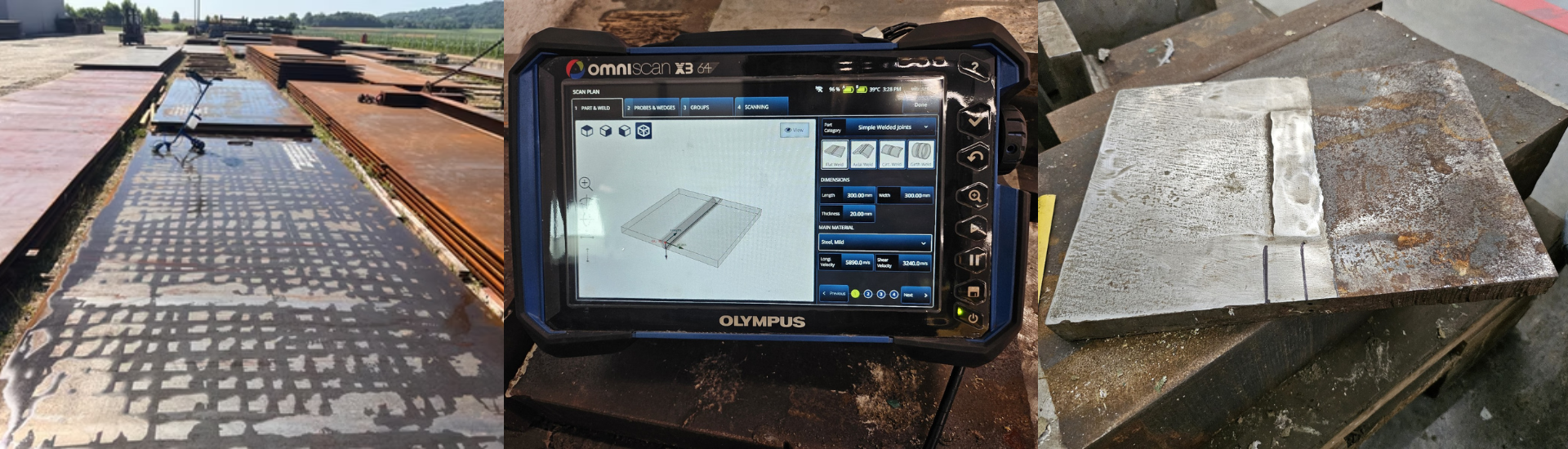
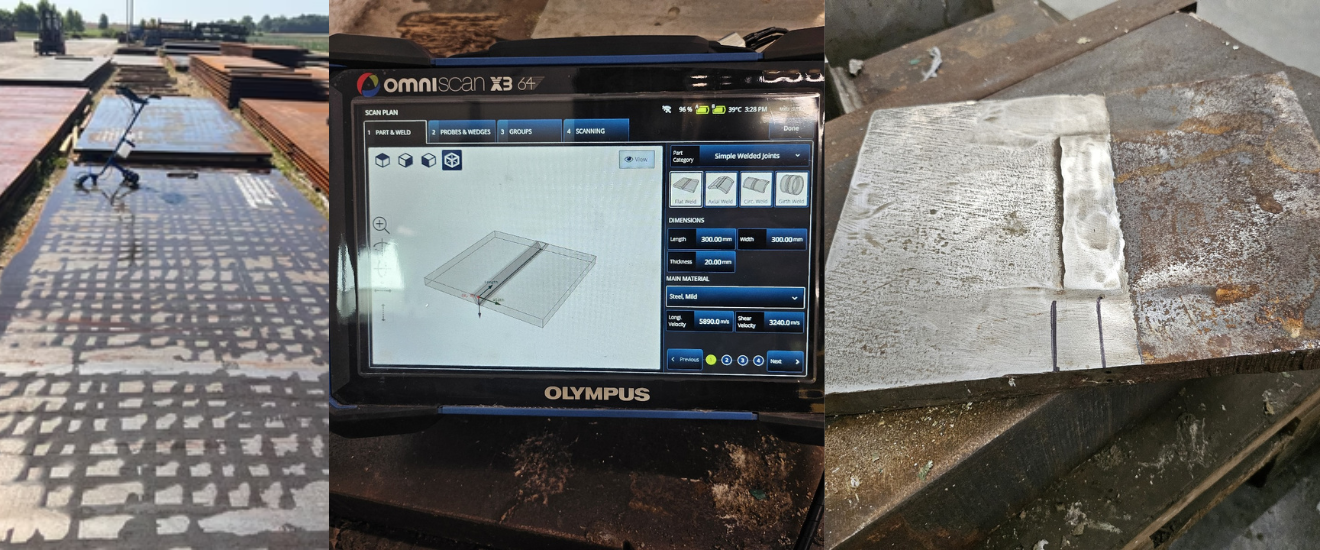
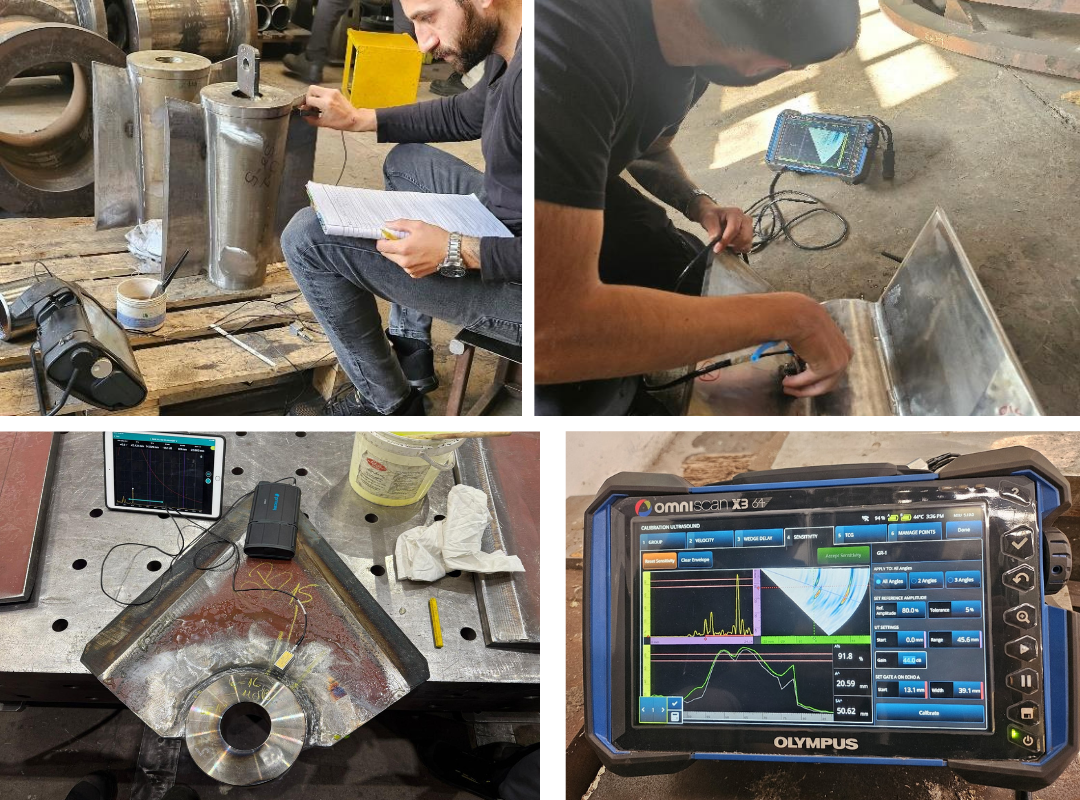
Our company not only sells NDT equipment but also actively performs non-destructive testing. This dual expertise sets us apart in the market, as our high level of qualification and practical experience enable us to provide top-quality solutions. By combining equipment sales with extensive industry knowledge, we ensure that our clients receive not only high-quality products but also expert advice and support tailored to their specific testing needs.
Our company collaborates with the following NDT equipment manufacturers.
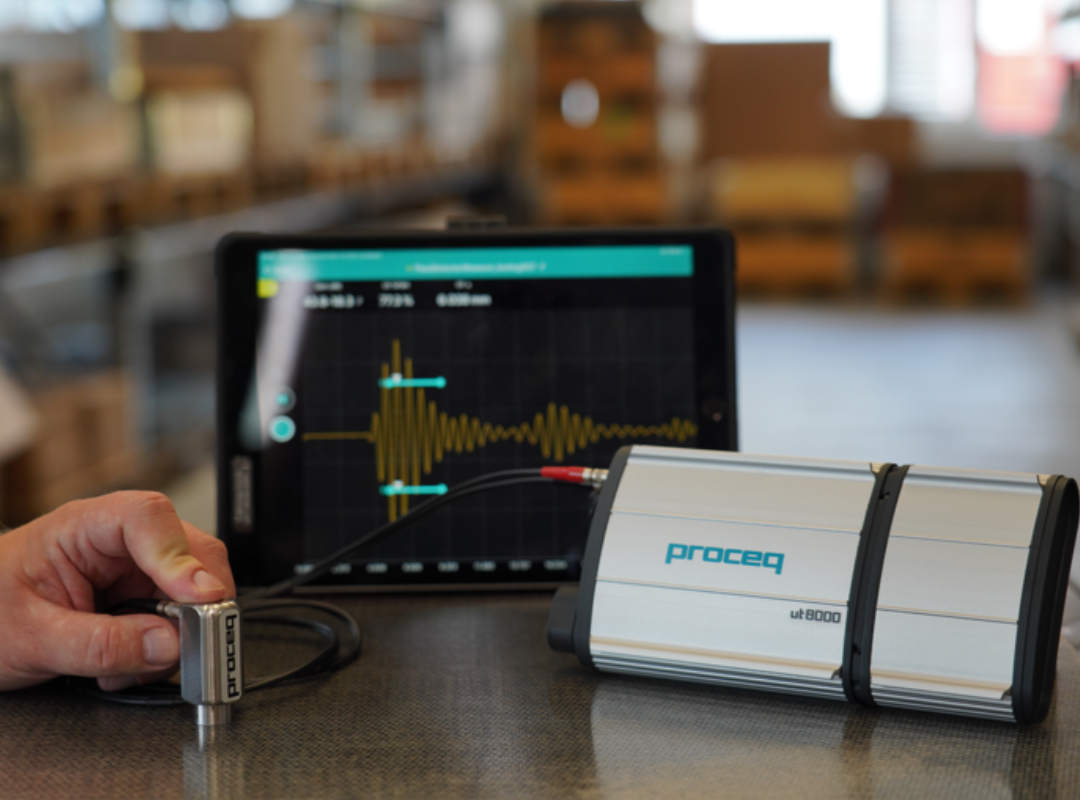
Proceq's UT8000 is a new generation of ultrasonic flaw detector. It places a pulser-receiver module in a portable, lightweight control box, compatible with all standard UT probes. The Proceq UT8000 represents a breakthrough in inspections with ultrasonic testing for detecting flaws such as cracks and voids in metals and composites. The Swiss Made, rugged, IP67-rated base unit is built for extreme levels of portability and comfort, from the benchtop of your lab to rope inspections in the toughest of places. Thanks to its sophisticated electronics that deliver cutting-edge bandwidth and signal-to-noise ratio, you can keep your probes and procedures.
Connect the powerful base unit to your iPad* and get to the real work faster. Our Proceq Flaw Detector Live app enhances your productivity with intelligent software features, such as the straightforward, gesture-driven calibration procedure, the built-in indication table, and the ability to rewind time for each indication. Review your measurements and communicate findings and insights enriched with voice, photo, and text annotations that deliver end-to-end traceability and peace of mind.
Read More!A probe is a sensor or transducer used in various industries, including medical diagnostics, engineering, and industrial testing. In ultrasound applications, probes emit and receive sound waves to capture images or detect material flaws. Different types include phased array, conventional, immersion, and high-frequency probes, each designed for specific uses. Probes play a crucial role in non-destructive testing (NDT), medical imaging, and scientific research.
A probe is a specialized sensor or transducer used to detect, measure, or transmit signals in various applications. In non-destructive testing (NDT), ultrasonic probes generate high-frequency sound waves to inspect materials for defects. Medical ultrasound probes create images of internal organs by transmitting and receiving sound waves. Other types include immersion probes for underwater testing, phased array probes for detailed imaging, and high-frequency probes for precision measurements. Probes are essential in industries like aerospace, healthcare, and manufacturing for quality control and diagnostics.
Read More!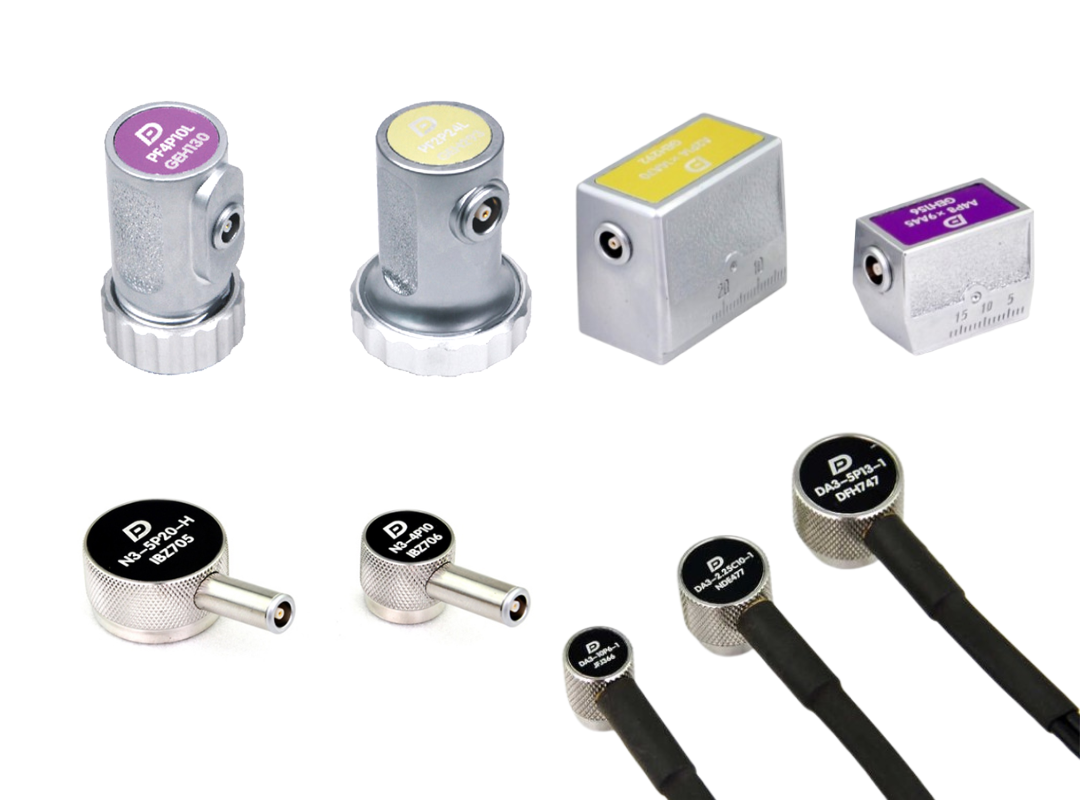
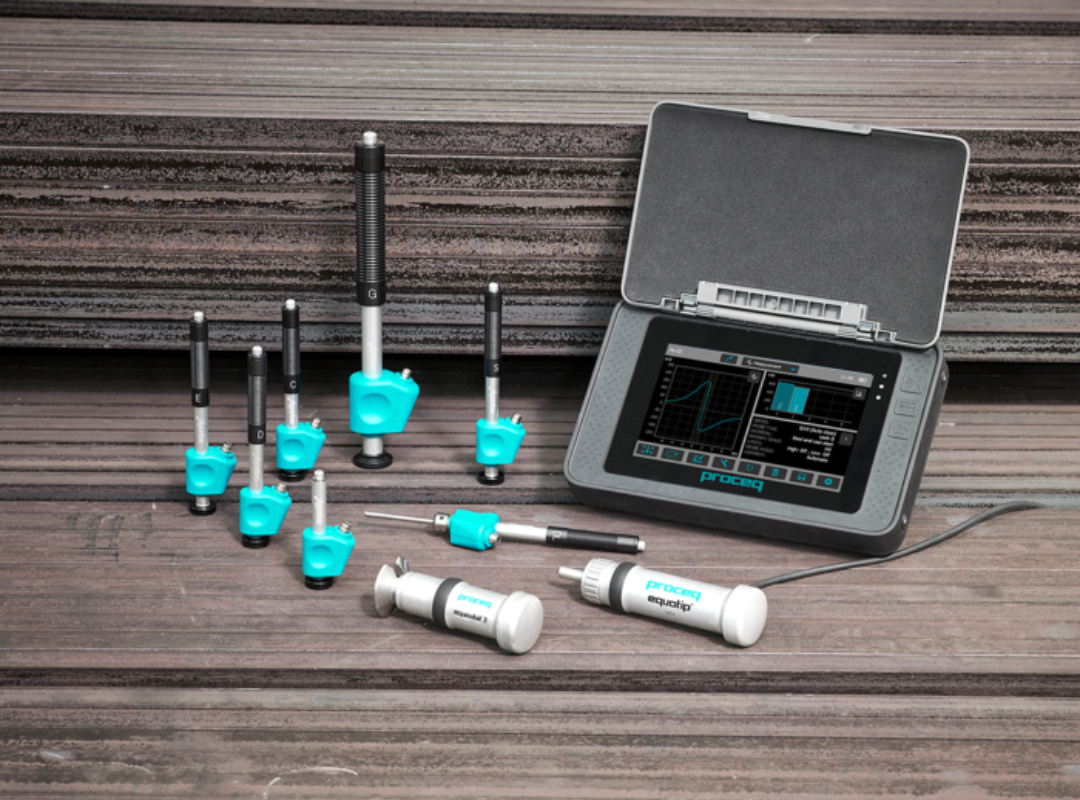
Portable Hardness Testers are compact and efficient devices designed for on-site hardness measurement of metals and other materials. Unlike traditional benchtop testers, they offer quick, non-destructive testing, making them ideal for manufacturing, quality control, aerospace, automotive, and construction industries. These testers use methods like Leeb rebound, Ultrasonic Contact Impedance (UCI), and Portable Rockwell to provide accurate results. Their lightweight design, real-time data capability, and cost-effectiveness make them essential for professionals needing reliable material hardness assessments in diverse environments. Popular models include the Equotip 550, Proceq Equotip Live, and MIC 10 UCI, offering versatility and precision.
Read More!Magnetic Particle Testing (MT) is a widely used non-destructive testing (NDT) method for detecting surface and near-surface defects in ferromagnetic materials such as iron, nickel, cobalt, and their alloys. This method is particularly effective for identifying cracks, laps, seams, inclusions, and other discontinuities that can compromise the structural integrity of a component.
The process begins by magnetizing the test object using direct or alternating current. Various magnetization techniques, such as the yoke method, prod method, coil method, and central conductor method, are used depending on the shape and size of the material. If a defect is present, it disrupts the magnetic field, creating flux leakage. This leakage attracts fine magnetic particles applied to the surface, making defects visible. These particles can be in dry powder form or suspended in a liquid carrier for better mobility and sensitivity.
Read More!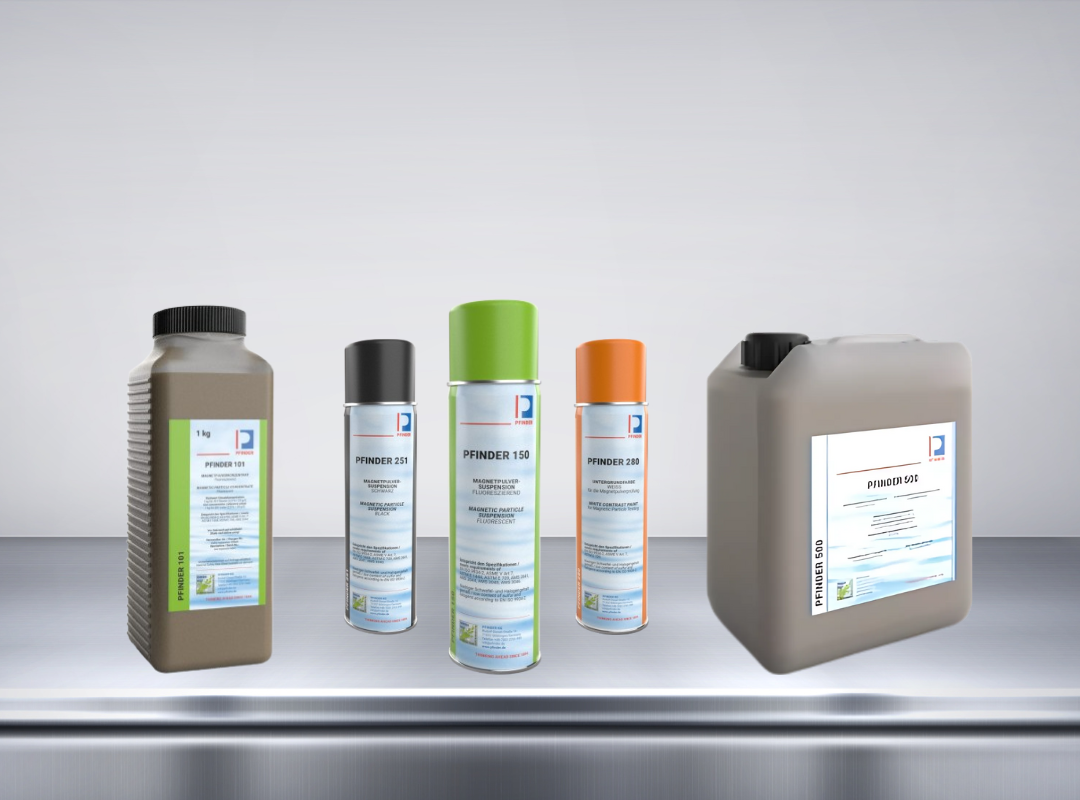
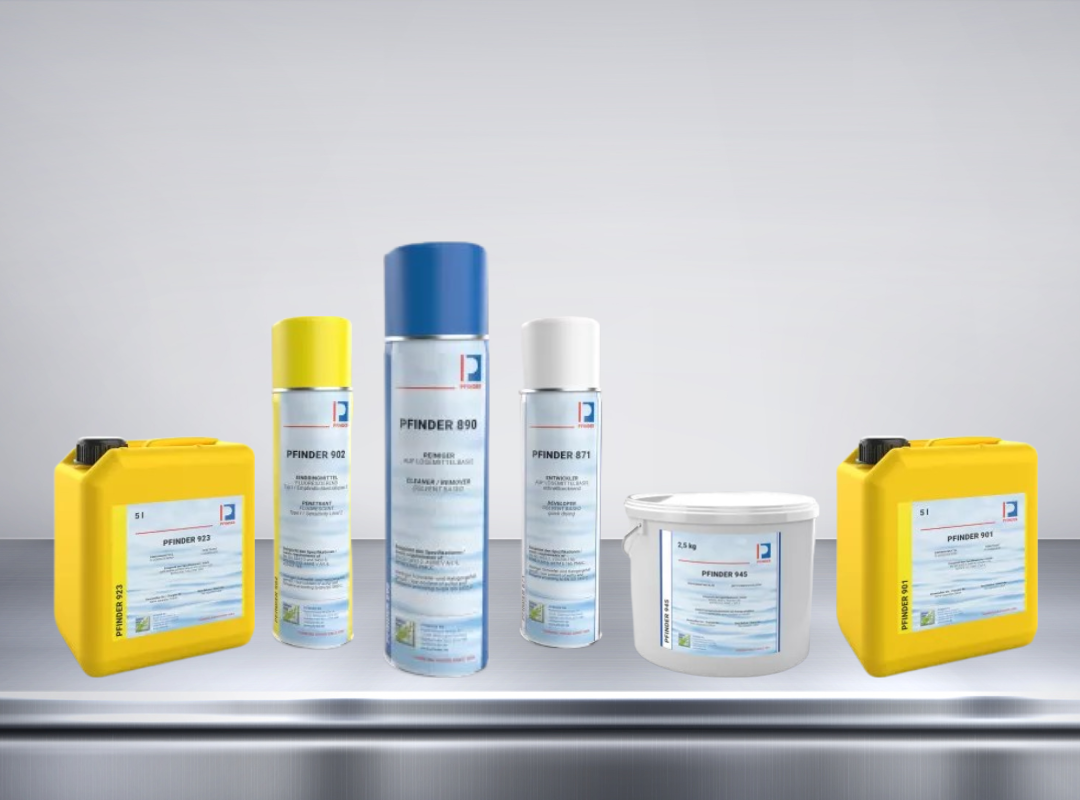
Penetrant testing (PT) is a non-destructive method used to detect surface defects in materials. It involves applying a liquid penetrant to the surface, which seeps into cracks and voids. After a cleaning process, a developer is applied to draw out the penetrant, making defects visible. This technique is widely used in industries like aerospace and automotive for inspecting welds, castings, and other components. PT is effective for detecting surface-breaking flaws and can be applied to a variety of materials.
Read More!



Office for Control and Civil Construction is a specialized company in welding and civil Construction, operating in accordance with European and international standards. With years of experience and a strong commitment to quality, our goal is to provide clients and partners with reliable, durable, and top-quality solutions.
Copyright © Office for Control and Civil Construction. All Rights Reserved.
Design & Developed by: I Web Wala.
